Standing on Piazza del Popolo, a 10-minute walk from the Spanish Steps, is the Basilica di Santa Maria del Popolo. As this is a Caravaggio pilgrimage, we’ll be making a beeline for the Cerasi Chapel, located in the left transept of the basilica, named after Monsignor Tiberio Cerasi, a wealthy lawyer and Treasurer-General to the Apostolic Chamber. After acquiring the chapel in 1600, Cerasi commissioned Caravaggio to paint two lateral panels: The Conversion of St Paul and The Crucifixion of St Peter (right). It wasn’t an unqualified success: painting on cypress panels, as required by the contract, presented difficulties for Caravaggio, and Cerasi rejected his first efforts. His second attempt, this time in his usual medium of oil and canvas, was more successful.
Another notable feature of the basilica is the Chigi Chapel, designed by Raphael in the early 16th century and completed by Bernini over a century later.
Good to know: like most churches in Rome, it closes from noon to 4pm.

After the church, you’ll need to fortify yourself with a good lunch (or, at the very least, a strong espresso or spritz) before the afternoon’s visit. From Santa Maria del Popolo, it’s about a 20-minute walk through the Villa Borghese, a beautiful 80-hectare park, to the Museo e Galleria Borghese. The museum and park are named after its former owner, Cardinal Scipione Borghese, the nephew of Pope Paul V and a prolific art collector. In addition to being a most prestigious patron, Borghese would also prove to be a powerful ally for Caravaggio, in both his career and his life: after the artist killed Ranuccio Tomassoni in a swordfight in 1606 and was forced to flee Rome, Borghese eventually agreed to obtain a papal pardon for Caravaggio, thus allowing him to return from exile and resume his work in Rome – in exchange for all his unsold paintings. Unfortunately, Caravaggio died in 1610 whilst trying to make it back to Rome.
Borghese had the villa built to house his extensive art collection (as you do).
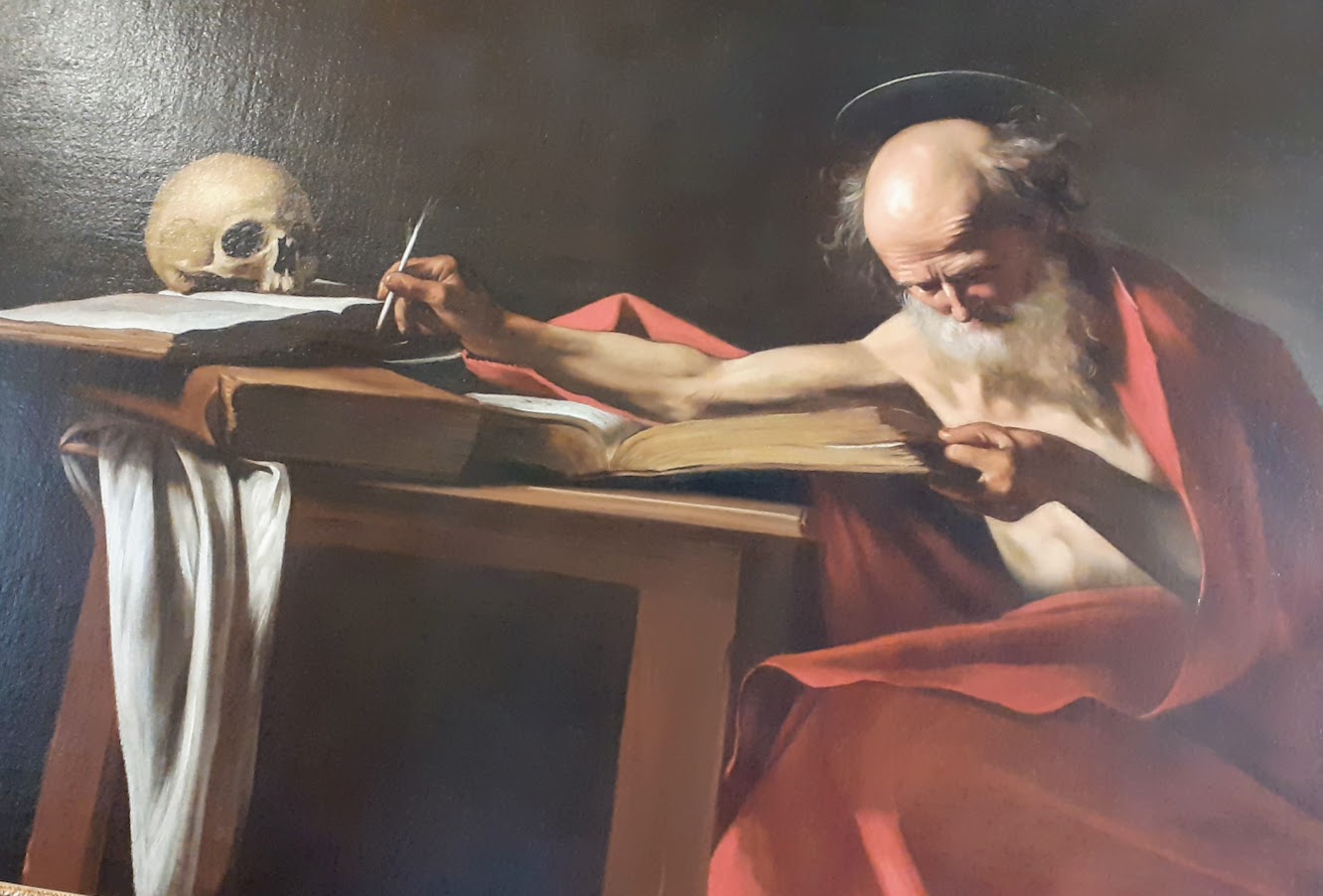
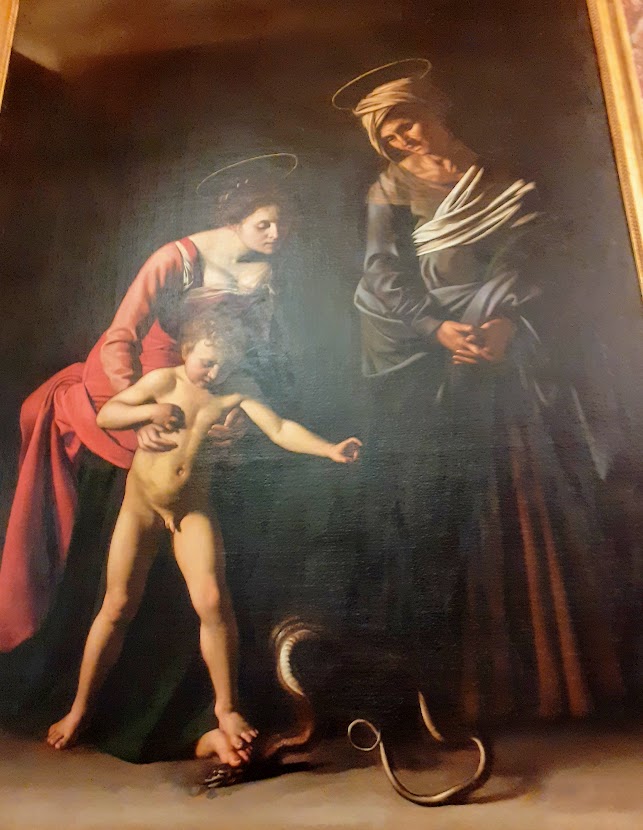
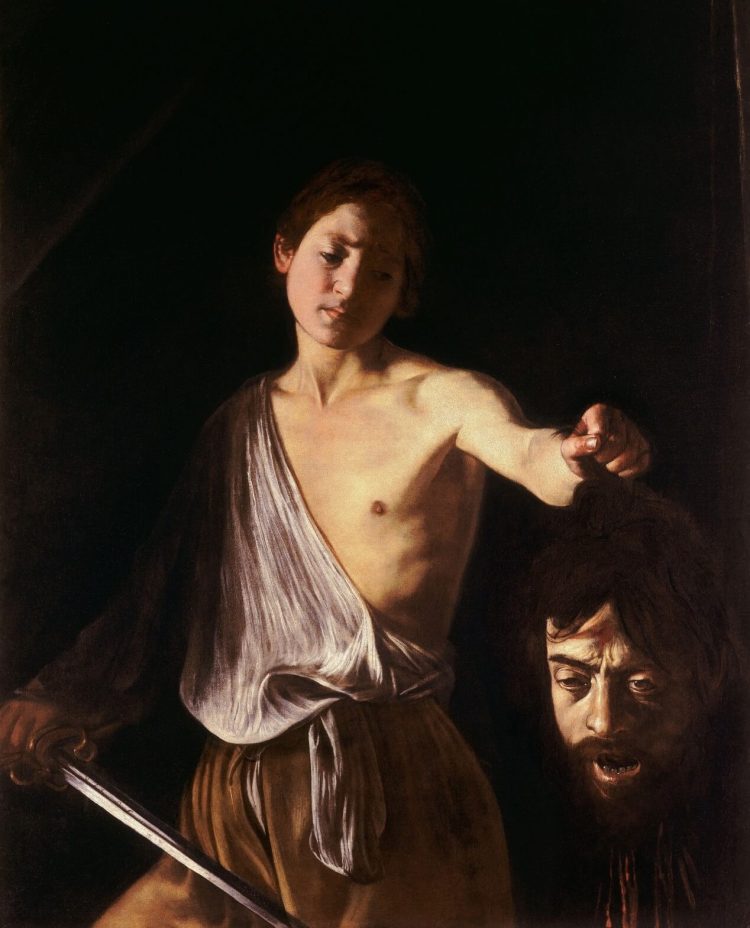
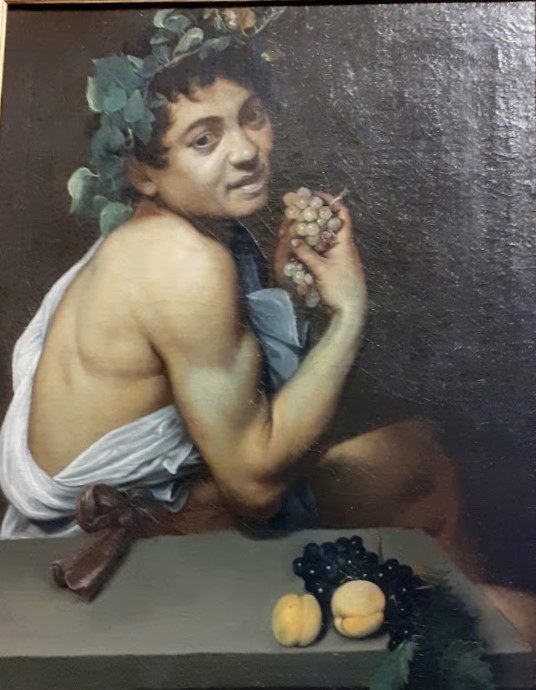
If you don’t have time to do all three days of my Caravaggio Tour, whatever you do, don’t skip this part of it. It’s magnificent. You’ll need several hours to do justice to the collections: on the ground floor alone, there are no less than six works by Caravaggio (deep breath): Boy with a Basket of Fruit, Self-Portrait as Bacchus (below right), Madonna dei Palafrenieri, St Jerome Writing (top of the page), David with the Head of Goliath and St John the Baptist.
Of these, I’d like to draw your attention to two in particular. The Madonna dei Palafrenieri (above) is striking both by its sheer dimensions (10 feet tall and almost 6 feet wide) and the arresting subject matter: a rather sexy, voluptuous Virgin Mary and the infant Jesus crush a serpent underfoot, symbolising the triumph of good over evil. Caravaggio’s depiction of David and Goliath (right), meanwhile, is harrowing: the severed head of Goliath held by the triumphant David is a self-portrait. In light of the events of the artist’s life, this takes on a powerful symbolic significance: it was Caravaggio’s way of pleading to his patron Scipione Borghese for mercy for the murder of Ranuccio Tomassoni.
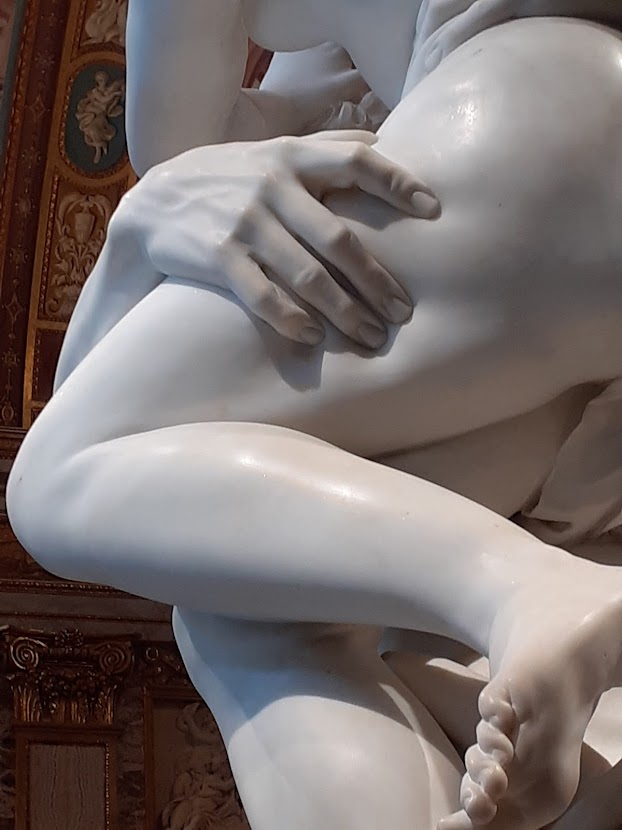
Caravaggio aside, highlights of the first floor include Bernini’s captivating sculpture of the Rape of Proserpine, (Ratto di Properpina), in which Pluto’s fingers sink into the flesh of Proserpine’s thighs (below left).
And that’s not all: there’s also the pinacoteca or picture gallery on the second floor, featuring an impressive collection of Renaissance paintings, including Raphael’s Deposition of Christ, and Rubens’ Deposition in the Tomb and Susanna and the Elders.
Good to know: you’ll need to book ahead for a specific timeslot.
If you’ve got any energy left afterwards, it’s a 15-minute walk from the museum to one of the best ice creams ever to grace your tastebuds. Located in a completely non-touristy, residential district on Via Collina, I Caruso makes delicious artisanal gelati, served with a choice of creams: either traditional whipped cream, or zabaglione, a decadent sort of confectioner’s custard made with marsala wine.

 Susan Turbie
One thought on “Rome Caravaggio Experience Day 2: Santa Maria del Popolo & Galleria Borghese”