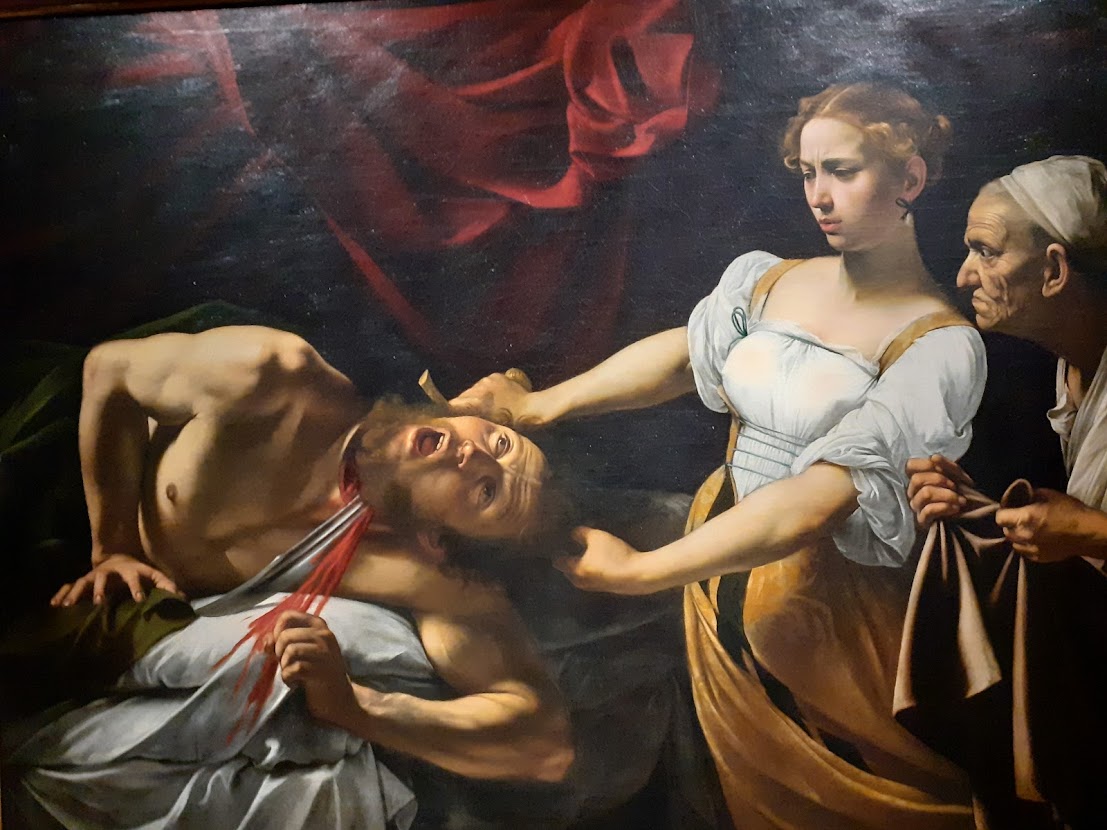
To kick off the last day of our Caravaggio trip to Rome, we’ll visit the Palazzo Barberini, one of the Galleria Nazionale d’Arte Antica’s two sites – the other being Palazzo Corsini, which we visited on Day 1. At the Palazzo Barberini you can see the stark, haunting St Francis in Meditation, the wistful Narcissus (right)and the compellingly gory Judith Slaying Holofernes (above). This is one of my favourites: note the look of squeamish distaste on the beautiful face of Judith, modelled by Fillide Melandroni, courtesan and Caravaggio muse, as she draws the blade of the sword across Holofernes’ neck, and contrast it with another famous treatment of the same Biblical subject by Artemisia Gentileschi (at the Museo Capodimonte in Naples: I’ll do a separate Caravaggio pilgrimage to Naples another time – watch this space). In Gentileschi’s painting, the protagonist seems more ruthless and dispassionate, which is interesting and revealing in the light of the painter’s life. Gentileschi, a rape survivor, became something of a #MeToo trailblazer and early feminist icon when she successfully brought charges against her attacker, her mentor Agostino Tassi, in 1612.
Anyway, I digress… Other highlights of the museum include Pietro Cortona’s Triumph of Divine Providence ceiling fresco and Holbein’s famous portrait of Henry VIII.
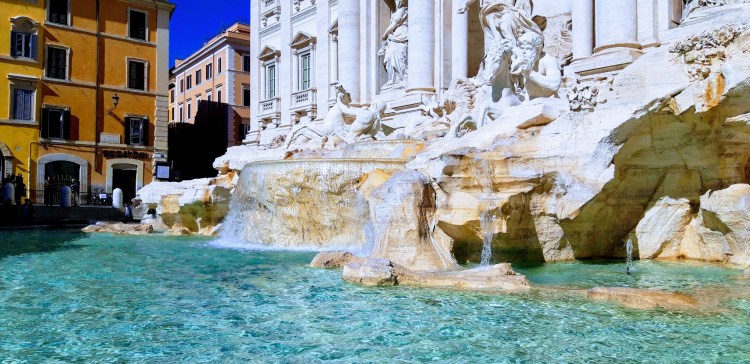
Now, lunch! Because great art nourishes the soul, but you mustn’t neglect the body. From the museum it’s about a 25-minute walk to the marvellous Ditirambo in Piazza della Cancelleria in the heart of the centro storico. On the way you can see the Trevi Fountain (well, you’re in Rome, and your non-arty friends won’t be interested in your Caravaggio pics but they will expect to see pictures of this). Ditirambo has no Caravaggesque associations, but the food is insane. They do wonderful pasta dishes with game: last time I went I had pappardelle with a wild boar sauce. Yum. Good to know: you’ll need to book ahead.
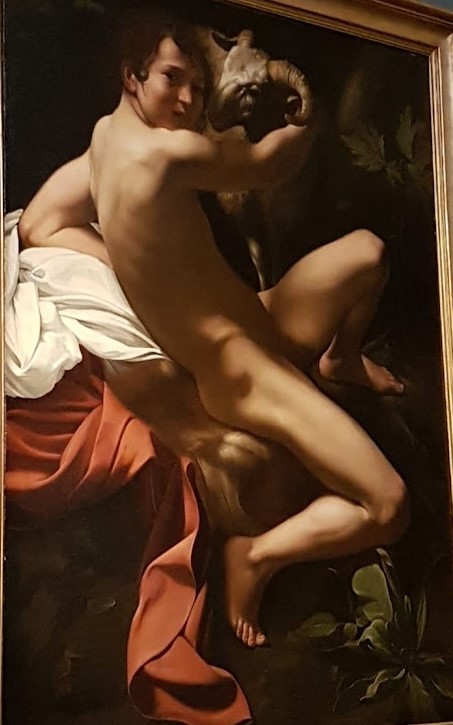
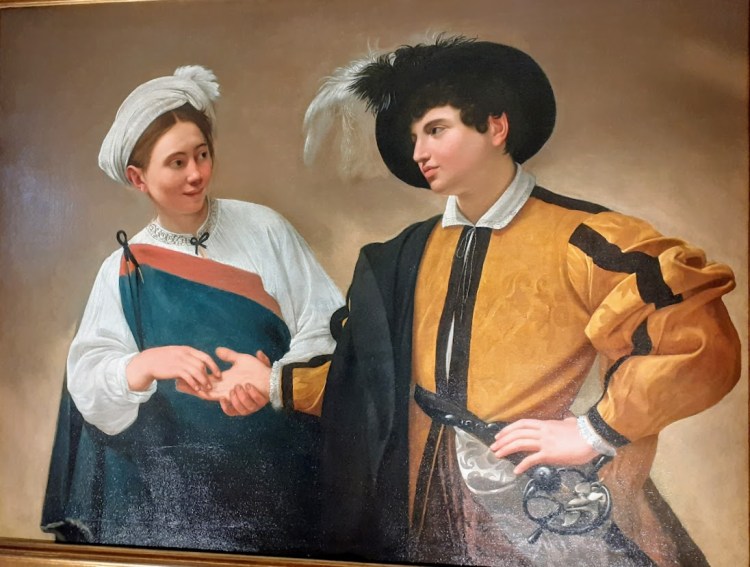
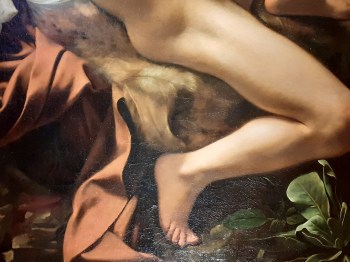
Afterwards, it’s just a 15-minute walk to the Capitoline Museums, via the Campo de’ Fiori and its lively market stalls. Before visiting the museum proper, in the courtyard you’ll see a monumental head, hand and foot from a 12-foot statue of the Emperor Constantine. The first floor of the Capitoline houses one of the city’s finest collections of classical sculpture, including the Etruscan Lupa Capitolina, a 5th-century bronze sculpture of Romulus and Remus suckling the she-wolf. On the second floor is the picture gallery (pinacoteca), featuring Caravaggio’s charming Fortune Teller (right) and the original John the Baptist (Youth with a Ram, below, left); the one in the Doria Pamphilj Gallery, which we saw on Day 1, is a copy, but attributed to the Master himself. The painting is notable for its unorthodox treatment of the subject matter: John the Baptist is typically depicted as a wizened old man, whereas here he is a carefree young boy (and nude).
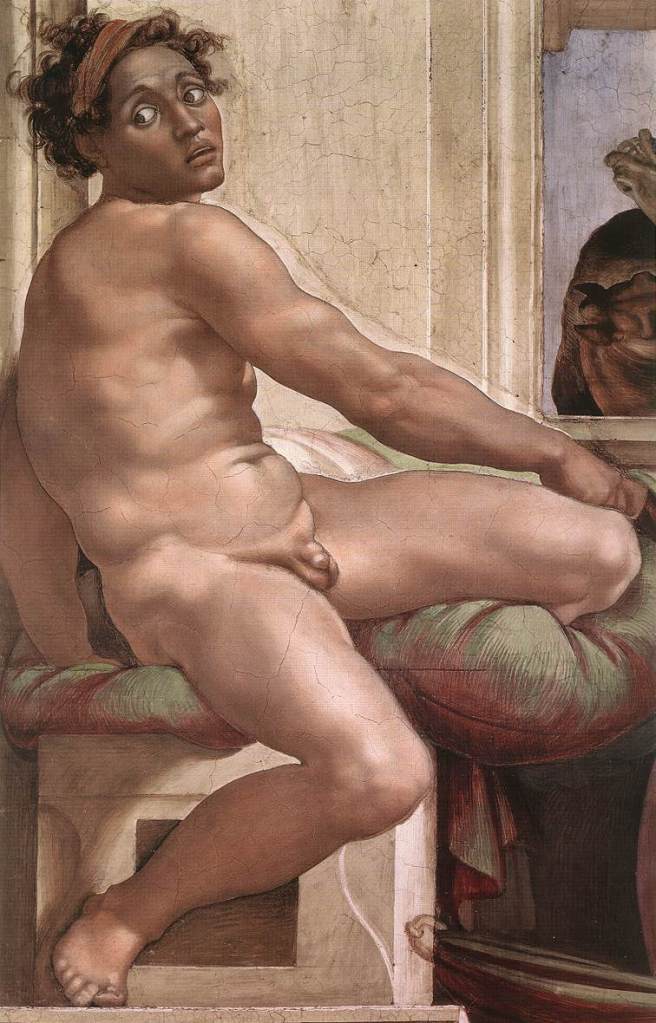
Both the nudity and the pose – identical to that of one of Michelangelo’s ignudi on the Sistine Chapel ceiling (below) – are both a homage to his namesake and a defiant assertion of his own individual style. The picture gallery also boasts masterpieces by Titian, Tintoretto, Van Dyck and Rubens.
Well, if you’ve done all the museums on this pilgrimage, well done! Rome has the world’s largest concentration of Caravaggio’s works, and you will now have seen pretty much all of them, (at least the ones that are open to the public), with the notable exception of The Entombment of Christ in the Vatican Museums. This is definitely worth a visit, but the Vatican as a whole warrants an entire day or at the very least, a half-day. In addition to the Caravaggio and the other treasures of the museums, there’s St Peter’s Basilica and of course, the Sistine Chapel, featuring, among other things, the ceiling fresco by Michelangelo. I recommend you book a guided tour: you’ll get so much more out of it.
Amateur alert: I am not an art historian or expert, (shocking news, I know), merely a passionate dilettante, and this is just a snapshot of Caravaggio’s work. If you’re interested in finding out more about him, I can heartily recommend Andrew Graham-Dixon’s riveting Caravaggio: A Life Sacred and Profane. It lends fascinating insights into his work and life and is extremely accessible.
“She dreamed she was Caravaggio in his wretched final hours, staggering along the shore in Porto Ercole trying desperately to retrieve the felucca that bore his lost paintings so he could return to Rome and give them to Cardinal Scipione Borghese in exchange for the long-awaited papal pardon for the murder of Ranuccio Tomassoni. Still weakened and half-blinded from the savage beating he had received months before in Naples, further diminished by his recent imprisonment and the days of walking all the way from Palo Laziale, scorched by the merciless, blistering sun, he finally succumbed: to fatigue, to the elements, to despair. Despair at the futility of his quest, of his life. He sank to his knees and the scorching sand rose up to swallow him…”




 Susan Turbie
2 thoughts on “Rome Caravaggio Experience Day 3: Palazzo Barberini & Capitoline Museums”