
Montmartre, Montparnasse & Charonne
Montmartre
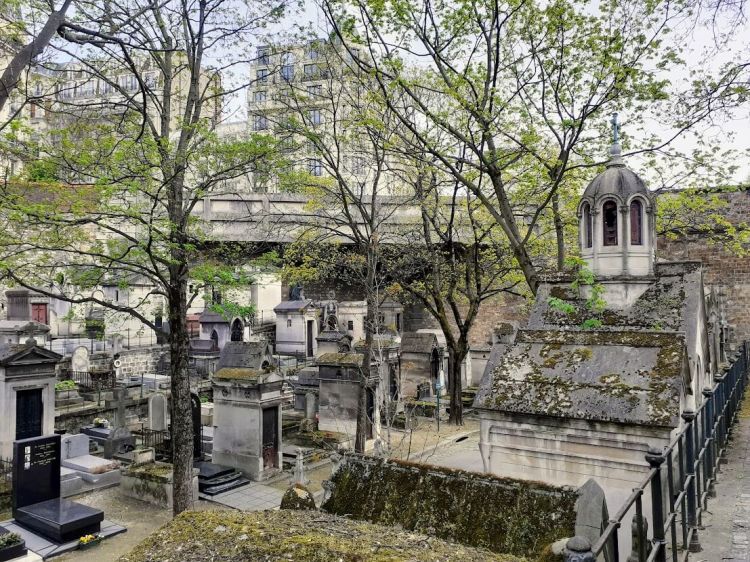
Miles smaller than Père Lachaise or Montparnasse, Montmartre Cemetery is the perfect “starter cemetery.”
Located near Pigalle and Place de Clichy, it opened in 1825 on the site of a former gypsum quarry which was used as a mass grave during the French Revolution.
Famous residents
Notable residents include leading names from French cinema such as actress Jeanne Moreau and new wave director François Truffaut. Also interred here are Russian dancer and choreographer Vaslav Nijinsky and 19th-century Naturalist novelist Émile Zola. Zola was originally buried here but his remains were subsequently moved to the Panthéon; the family grave, however, is still in Montmartre.
Montmartre is also part of my Romantic tour of Paris, featuring as it does the final resting places of a number of leading musicians, writers and artists of the Romantic movement such as Ari Scheffer, Alexandre Dumas Fils, Alfred de Vigny, Théophile Gautier, Hector Berlioz, Léo Delibes and Jacques Offenbach.

Montparnasse

Tucked away in a quiet, largely residential district in the 14th arrondissement with the Montparnasse Tower rearing dramatically up in the background, Montparnasse is Paris’s second largest cemetery – but less than half the size of Père Lachaise, so you can easily do a tour of it in a couple of hours.
Built in 1824, it’s separated into two parts by the Rue Emile-Richard. Like Père Lachaise, it features a memorial to the victims of the communards killed during the Semaine Sanglante, as well as to those who died in the Franco-Prussian war of 1870. Another notable feature is the 17th-century flour mill, the only vestige of the farm which previously stood here.
Famous residents
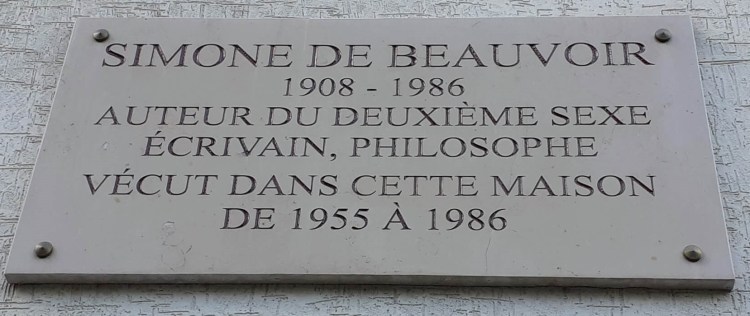
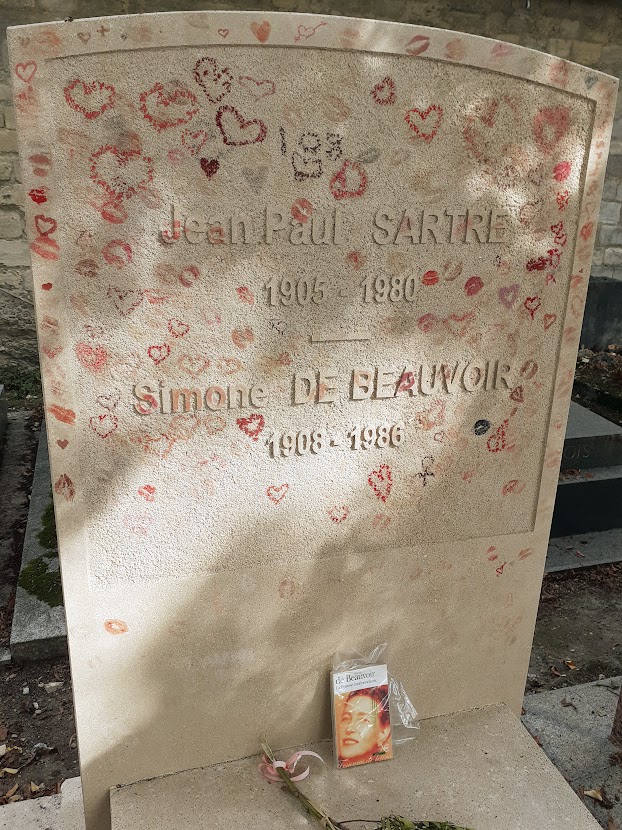
Man and woman of letters, fervent anti-conformists and tireless activists, Jean-Paul Sartre and Simone de Beauvoir were King and Queen of the Left-bank intelligentsia. They were together for over half a century and lived and worked in the Montparnasse area, frequenting local cafés such as Le Dôme and Les Deux Magots: the house where Beauvoir spent the last thirty years of her life is a stone’s throw away in rue Victor Schoelcher. It is therefore entirely fitting that they be buried in this cemetery – and side by side. As you can see from the photo here, their tomb has had the Oscar Wilde treatment.

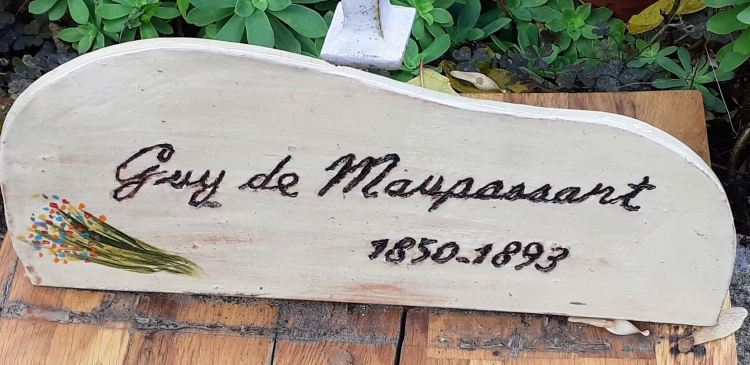
Other eminent inmates include iconic singer-songwriter Serge Gainsbourg; the Irish-French playwright and poet Samuel Beckett; master of the short story Guy de Maupassant and Charles Baudelaire: poet, absinthe aficionado and French translator of Edgar Allen Poe’s work.
Oddities: among the more whimsical graves is this one with a sculpture of a giant pair of hands (left).
Recommended reading
- Simone de Beauvoir, L’Invitée (She Came to Stay). Largely autobiographical tale of a ménage-à-trois that turns sour.
- Jean-Paul Sartre, Huis Clos (No Exit). Set in hell, this harrowing play contains the classic line “Hell is other people.”
- Guy de Maupassant, Contes du Jour et de la Nuit (Tales of Day and Night). It’s hard to pick one short story collection. This one features treasures such as La Parure (The Necklace) and Une Vendetta.
Charonne
Located in Place Saint-Blaise in the 20th arrondissement, not far from Père Lachaise, this little-known cemetery is dwarfed by Paris’s Big Three cemeteries and devoid of famous graves, but nevertheless worth a visit. For one thing, unlike in other countries where graveyards are typically behind or around churches, in France this has ceased to be the case since the Middle Ages: this is therefore an exception, being one of only two churches in Paris still with its own graveyard.
The second point of interest is the church itself, Saint-Germain de Charonne (right and below in the gallery). Originally built in the 12th century with later additions in the 15th and 18th centuries, the style ranges from Romanesque to Classical.
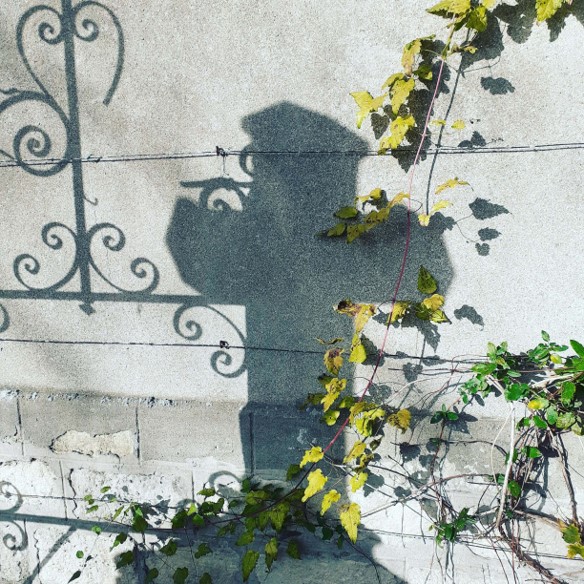
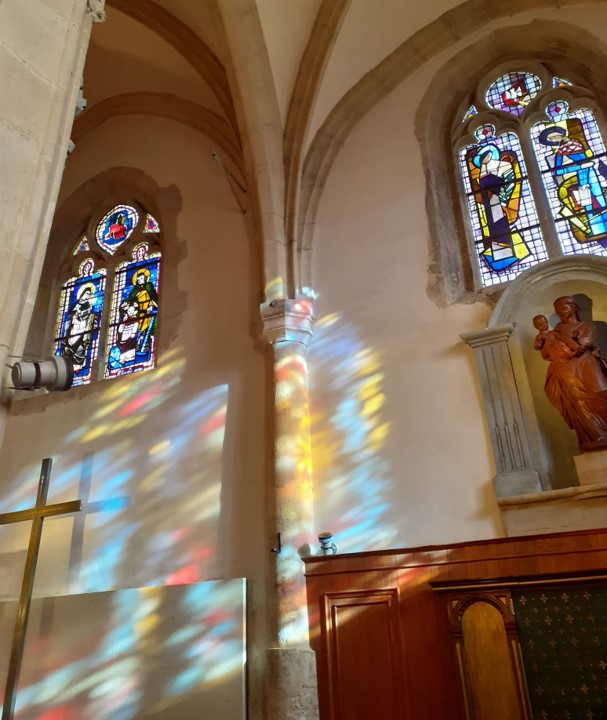
The cemetery itself is much smaller than the Big Three, and the graves are more modest and low-key, with very few of the grandiose mausolea so characteristic of Père Lachaise, Montmartre and Montparnasse.
Pop culture fact: the final wedding scene in 1963 gangster caper Les Tontons flingueurs was filmed in and around the church.

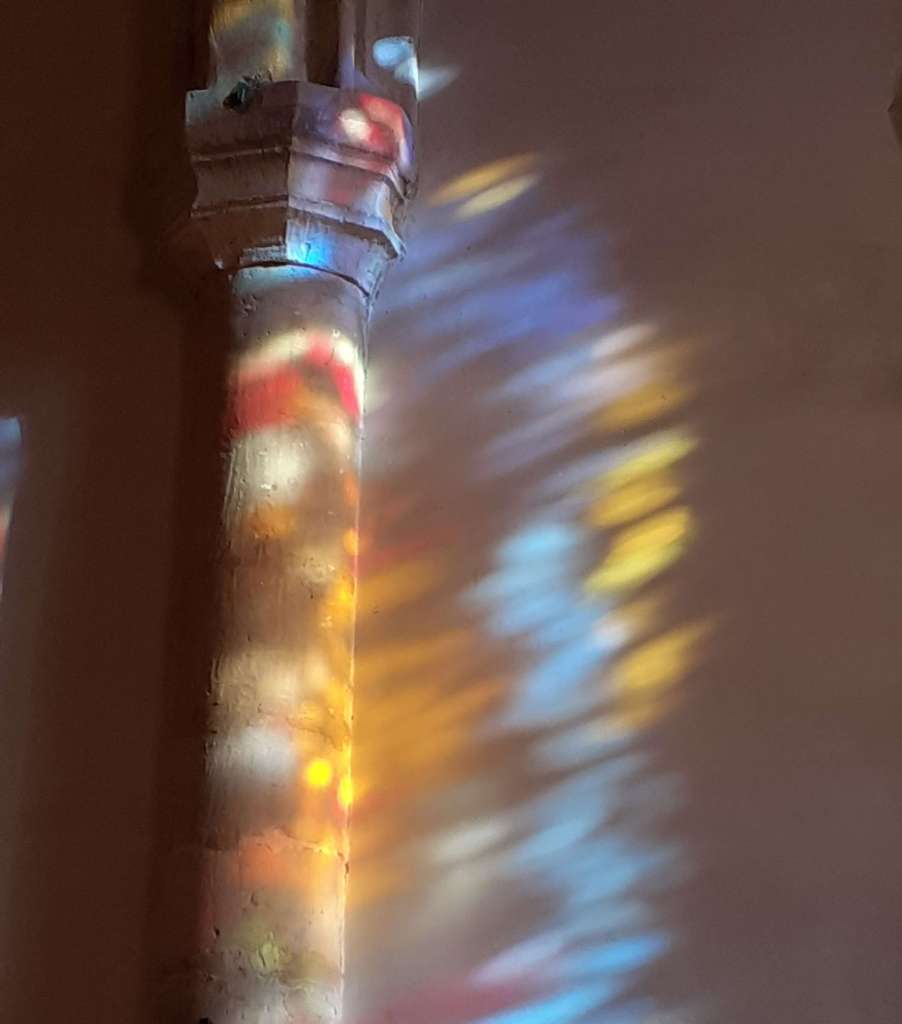

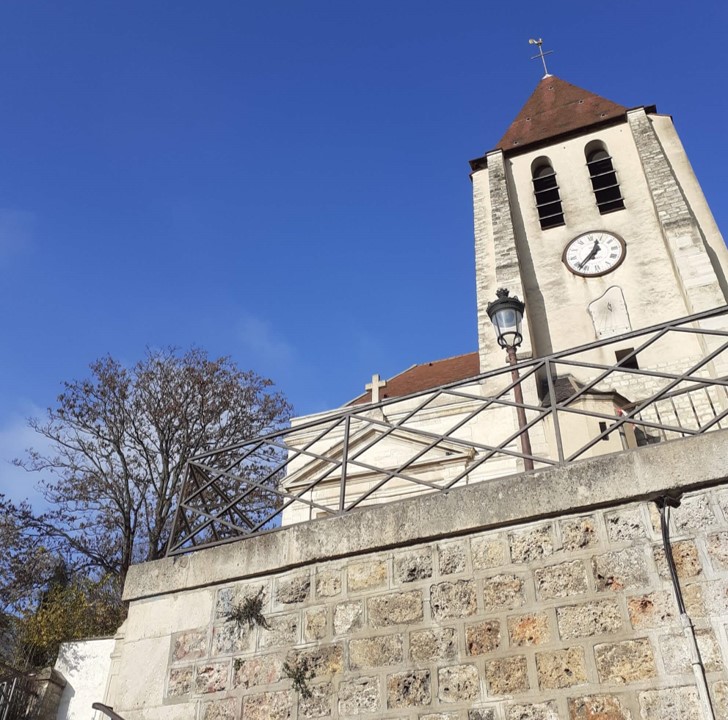
 Susan Turbie
One thought on “Paris’s Most Illustrious Dead: Luc’s Cemetery Tour – Part 2”