The first leg of the tour will take you around the Centro Storico or historic centre. Start by visiting the delightful Palazzo & Galleria Doria Pamphilj. Behind the rather unprepossessing facade on Via del Corso is one of the city’s most dazzling private art collections.
A nice personal touch: the audio-guide is narrated by the Pamhilij heir and resident of the palazzo, Prince Jonathan. In flawless English (and French, according to my ex-husband Luc who had the French guide), he intersperses comments on the house and collections with charming personal anecdotes, such as his memories of him and his siblings being scolded for ruining the ancient parquet floor by roller-skating up and down the main gallery. My brother and I did exactly the same when we were kids. (Well, it wasn’t in a 16th-century palace, it was along a parade of shops where the Spar and the chip shop were, but I can still relate.)
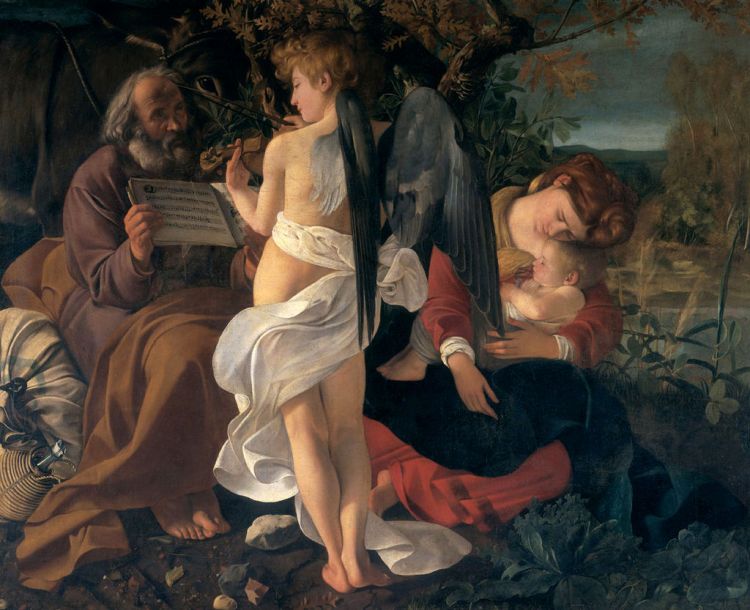
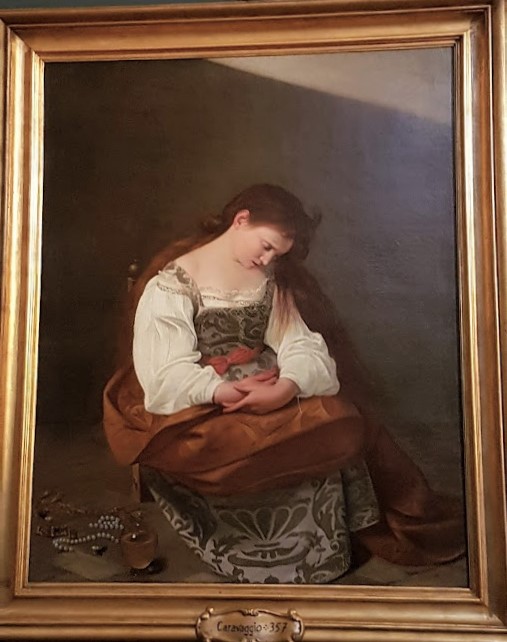
One of Prince Jonathan’s illustrious ancestors was a prolific and very discerning collector; he was also something of a visionary: he had the brilliant idea of acquiring three Caravaggios at a time when no one else in Rome would touch Caravaggio with a bargepole: the hauntingly beautiful Rest on the Flight into Egypt (left), Penitent Mary Magdalene (above), and John the Baptist (Youth with a Ram). (For more details about this painting, see Day 3).
In addition to the Caravaggios, the gallery boasts a number of other masterpieces by Tintoretto, Breughel, Titian and Velázquez.
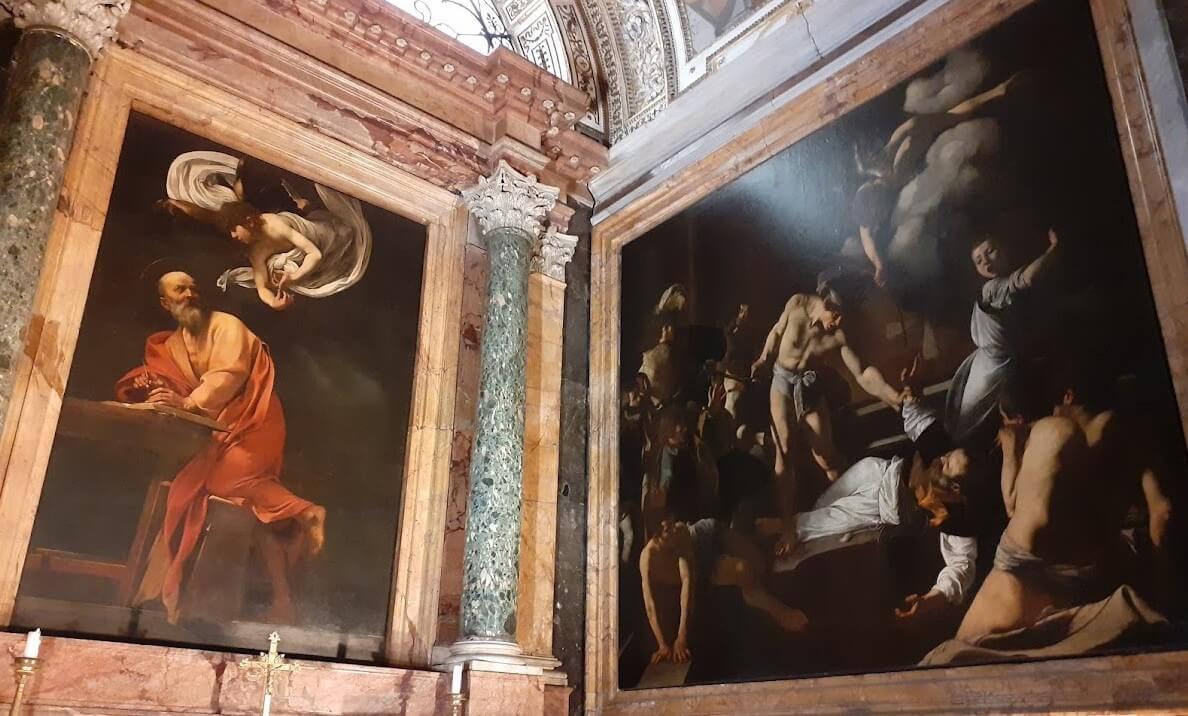
After leaving the palazzo, turn left along the Via del Corso then left again along Via del Seminario which will take you to Piazza della Rotonda and the Pantheon. Just a few minutes’ walk from there, halfway between the Pantheon and Piazza Navona, is the Baroque Church of San Luigi dei Francesi. In the Contarelli Chapel, you’ll find the magnificent St Matthew triptych: St. Matthew and the Angel, The Martyrdom of St. Matthew, (top of the page, respectively left and right), and The Calling of St. Matthew (right). The Calling is a typical example of Caravaggio’s innovative and controversial depiction of Biblical scenes: here, Jesus comes to Matthew to inspire him to follow him in a rather seamy tavern with grimy windows. The painting is also notable in that the protagonists are dressed in contemporary clothes. But this wasn’t Caravaggio just being childishly provocative. He had a far loftier objective in mind: that of making the Bible more realistic and accessible, thus broadening its appeal beyond the educated elite, making him a powerful instrument of the Counter-Reformation movement.
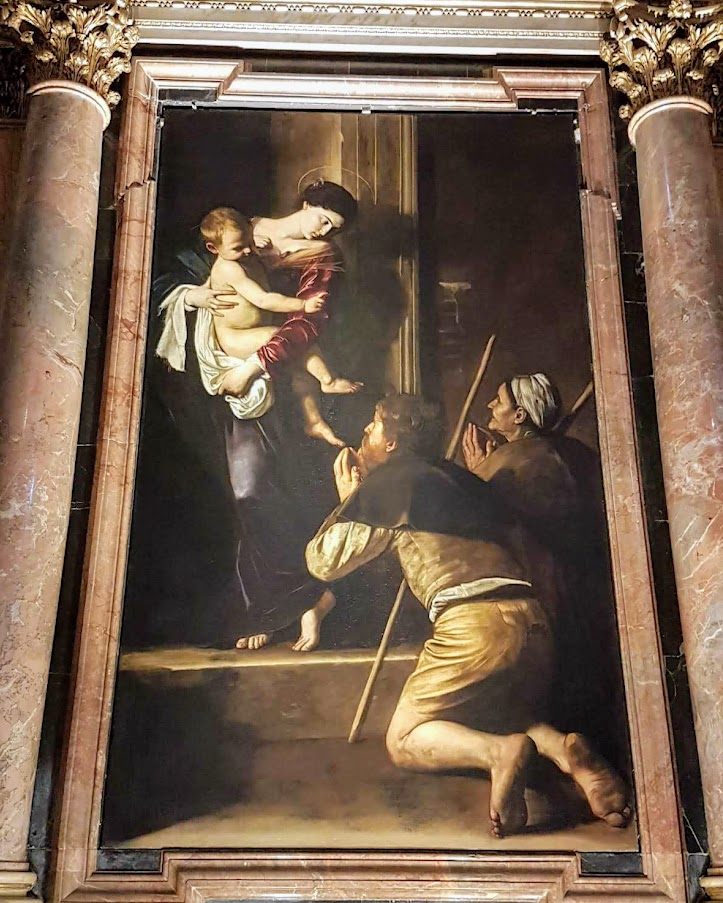

From San Luigi dei Francesi, it’s just a short walk to the Basilica di Sant’Agostino, where you can see Caravaggio’s magnificent altarpiece, Madonna of Loreto, also known as the Madonna dei pellegrini or Pilgrim’s Madonna, (left). According to the myth, the Holy House of Loreto miraculously flew from Nazareth and eventually landed in Loreto in the Marche region in the 13th century. This is another example of Caravaggio’s common touch and talent for religious populism: the couple of pilgrims kneeling at the Virgin’s feet are poor peasants with dirty feet.
Good to know: most of the city’s churches close between 12/12:30 and 4pm, so time your visits around this. Admission is free, but you have to put a €1 coin into a timed meter to light up the paintings, although there are usually crowds of people queuing up to do this.
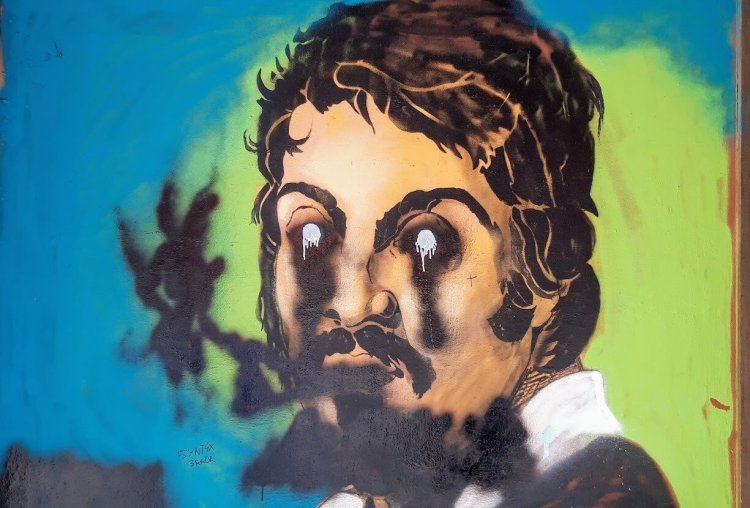
You’ll probably be ready for lunch by now; fortunately, it’s just a couple of minutes’ walk to La Campana, Rome’s oldest restaurant, on Vicolo della Campana, where the Master himself used to dine! Goethe and Federico Fellini are among other illustrious former patrons. Enjoy traditional Roman fare such as offal and carciofi alla guidia in an old-school décor. It’s always packed with locals (a good sign). After lunch, continue to follow in Caravaggio’s footsteps by walking the 250 metres to the romantically-named Vicolo del Divino Amore, a little street of no consequence, other than that He rented a house there from 1603 to 1605. There’s no plaque to commemorate his presence here – just a vivid street art version of Ottavio Leone’s famous portrait of the artist on the outside wall (right).
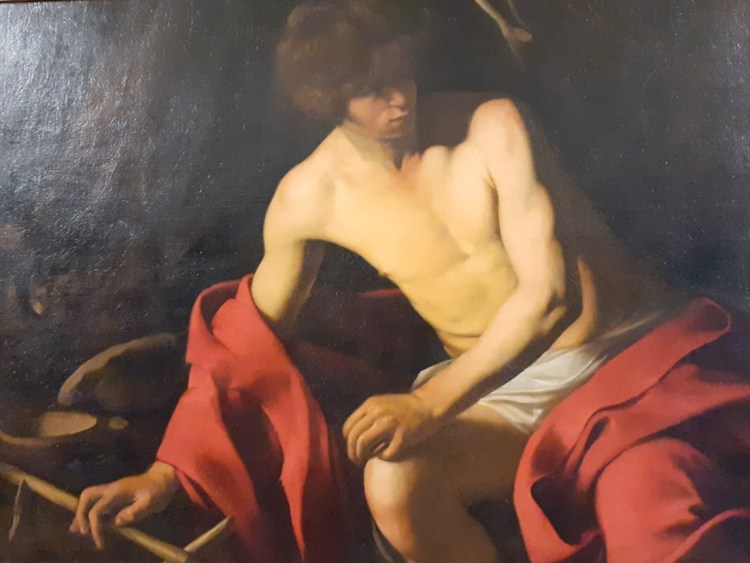
Now you can take a leisurely walk back through the Centro Storico, possibly taking a detour to stroll through the Jewish Ghetto, then cross over the Tiber on the Ponte Garibaldi into the vibrant Trastevere with its picturesque cobbled streets and ivy-festooned houses. From there it’s about a ten-minute walk to the Galleria Nazionale d’Arte Antica di Palazzo Corsini, which houses Caravaggio’s San Giovanni Battista (left) as well as works by Poussin, Rubens and Carracci.
Good to know: your ticket also gives you admission to its sister museum, the Palazzo Barberini, a key stage along our Caravaggio pilgrimage. But that’ll be for another day.


2 thoughts on “Rome Caravaggio Experience Day 1: Centro Storico & Trastevere”