- Marnie’s Lemon Perfection
The idea for this delicious, no-bake dessert – a sort of cross between lemon parfait and cheesecake – came partly from inspiration, partly from a mistake. I was making my half-sister Dinah’s lemon mousse and was running late so put it in the freezer to speed up the setting – then forgot about it. When I took it out a couple of hours later, it had frozen to the texture of soft ice cream and I found it quite delightful like that.
The crust part is just because I love cheesecake.
Serves 4-6
Ingredients
For the lemon filling:
- 4 medium free-range eggs
- 2 lemons, zest and juice
- About 60-70g sugar
- 70g butter
For the crust:
- 100g butter
- 250g biscuits – preferably Belgian speculoos biscuits (crumbly, spicy caramelized biscuits). If you can’t get hold of them, ginger biscuits will do.
Method
Butter a cake tin and line with greaseproof paper.
To make the crust: put the biscuits in a freezer bag and bash with a rolling pin until they’re crumbs.
Melt the butter and mix it with the biscuit crumbs then press into the cake tin and smooth the mixture out to ensure it’s evenly distributed.
Put the cake tin in the freezer for about 10 minutes to firm up.
Meanwhile, make the lemon mousse and tip it on to the biscuit base. Freeze for about two hours.
Serve alone or with a raspberry coulis.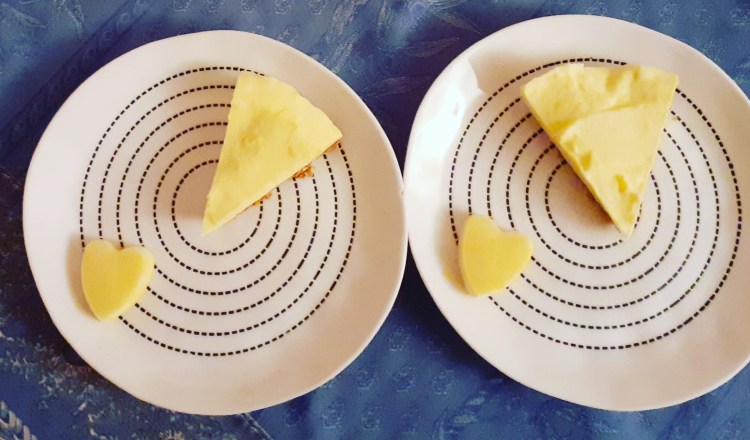
- Paris’s Most Illustrious Dead: Luc’s Cemetery Tour – Part 2
Montmartre, Montparnasse & Charonne
Montmartre
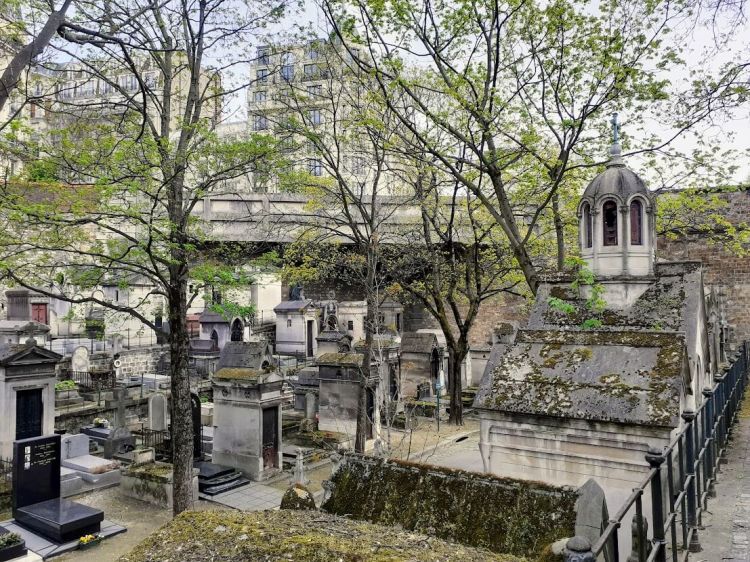
Miles smaller than Père Lachaise or Montparnasse, Montmartre Cemetery is the perfect “starter cemetery.”
Located near Pigalle and Place de Clichy, it opened in 1825 on the site of a former gypsum quarry which was used as a mass grave during the French Revolution.
Famous residents
Notable residents include leading names from French cinema such as actress Jeanne Moreau and new wave director François Truffaut. Also interred here are Russian dancer and choreographer Vaslav Nijinsky and 19th-century Naturalist novelist Émile Zola. Zola was originally buried here but his remains were subsequently moved to the Panthéon; the family grave, however, is still in Montmartre.
Montmartre is also part of my Romantic tour of Paris, featuring as it does the final resting places of a number of leading musicians, writers and artists of the Romantic movement such as Ari Scheffer, Alexandre Dumas Fils, Alfred de Vigny, Théophile Gautier, Hector Berlioz, Léo Delibes and Jacques Offenbach.

Montparnasse

Tucked away in a quiet, largely residential district in the 14th arrondissement with the Montparnasse Tower rearing dramatically up in the background, Montparnasse is Paris’s second largest cemetery – but less than half the size of Père Lachaise, so you can easily do a tour of it in a couple of hours.
Built in 1824, it’s separated into two parts by the Rue Emile-Richard. Like Père Lachaise, it features a memorial to the victims of the communards killed during the Semaine Sanglante, as well as to those who died in the Franco-Prussian war of 1870. Another notable feature is the 17th-century flour mill, the only vestige of the farm which previously stood here.Famous residents
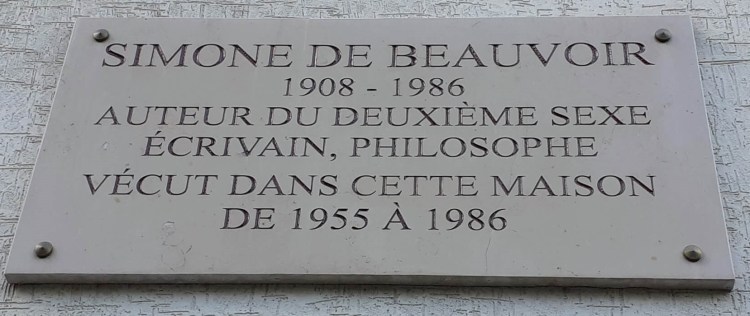
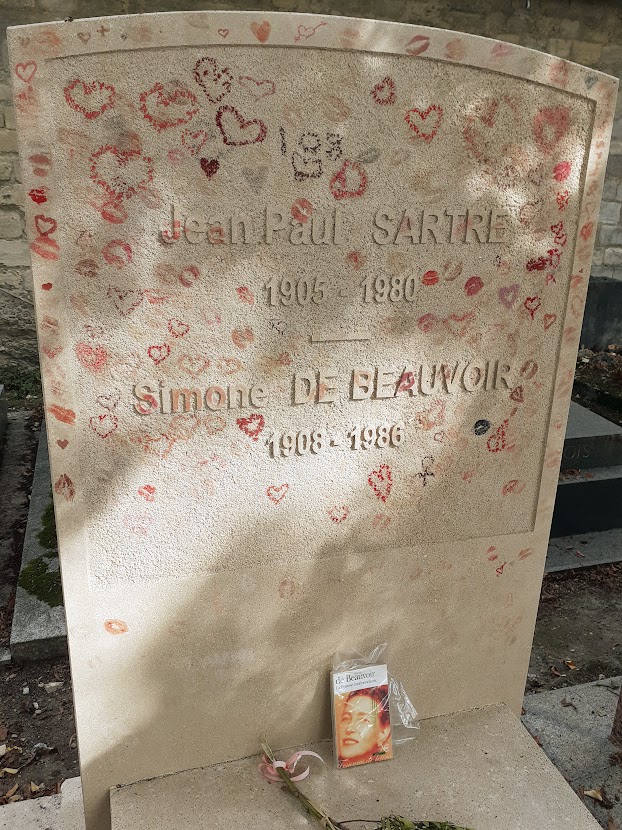
Man and woman of letters, fervent anti-conformists and tireless activists, Jean-Paul Sartre and Simone de Beauvoir were King and Queen of the Left-bank intelligentsia. They were together for over half a century and lived and worked in the Montparnasse area, frequenting local cafés such as Le Dôme and Les Deux Magots: the house where Beauvoir spent the last thirty years of her life is a stone’s throw away in rue Victor Schoelcher. It is therefore entirely fitting that they be buried in this cemetery – and side by side. As you can see from the photo here, their tomb has had the Oscar Wilde treatment.

Other eminent inmates include iconic singer-songwriter Serge Gainsbourg; the Irish-French playwright and poet Samuel Beckett; master of the short story Guy de Maupassant and Charles Baudelaire: poet, absinthe aficionado and French translator of Edgar Allen Poe’s work.
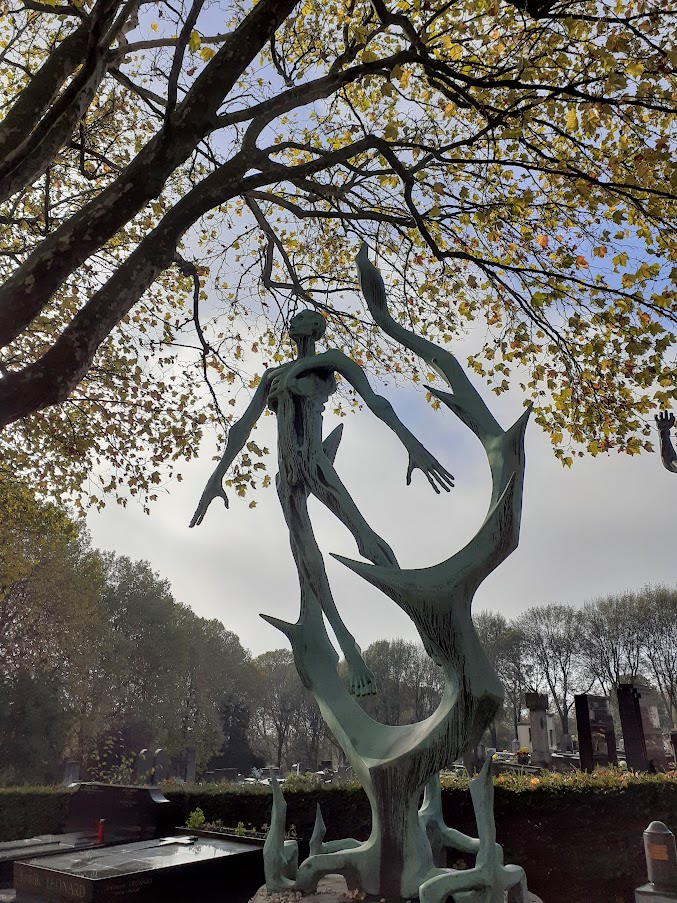
Oddities: among the more whimsical graves is this one with a sculpture of a giant pair of hands (left).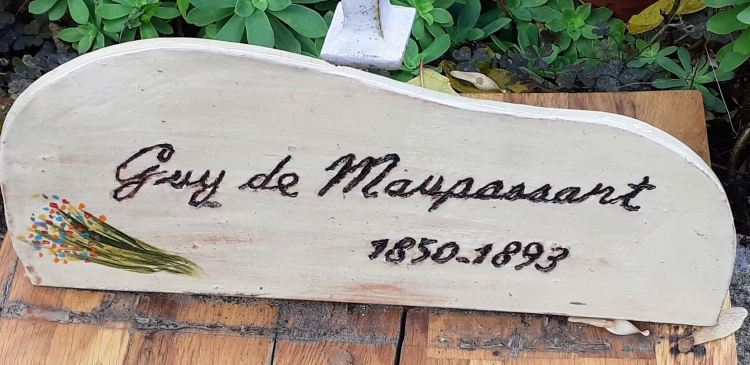
Recommended reading
- Simone de Beauvoir, L’Invitée (She Came to Stay). Largely autobiographical tale of a ménage-à-trois that turns sour.
- Jean-Paul Sartre, Huis Clos (No Exit). Set in hell, this harrowing play contains the classic line “Hell is other people.”
- Guy de Maupassant, Contes du Jour et de la Nuit (Tales of Day and Night). It’s hard to pick one short story collection. This one features treasures such as La Parure (The Necklace) and Une Vendetta.
Charonne
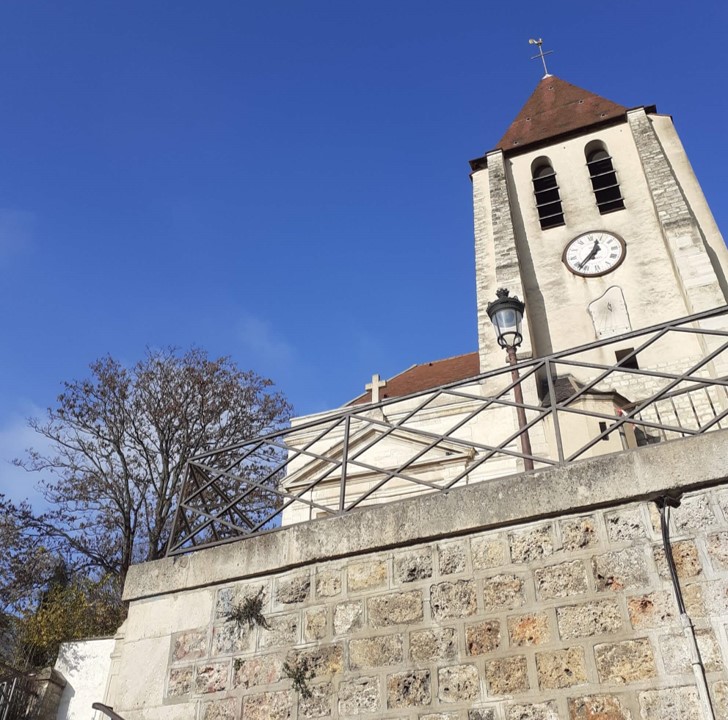
Located in Place Saint-Blaise in the 20th arrondissement, not far from Père Lachaise, this little-known cemetery is dwarfed by Paris’s Big Three cemeteries and devoid of famous graves, but nevertheless worth a visit. For one thing, unlike in other countries where graveyards are typically behind or around churches, in France this has ceased to be the case since the Middle Ages: this is therefore an exception, being one of only two churches in Paris still with its own graveyard.
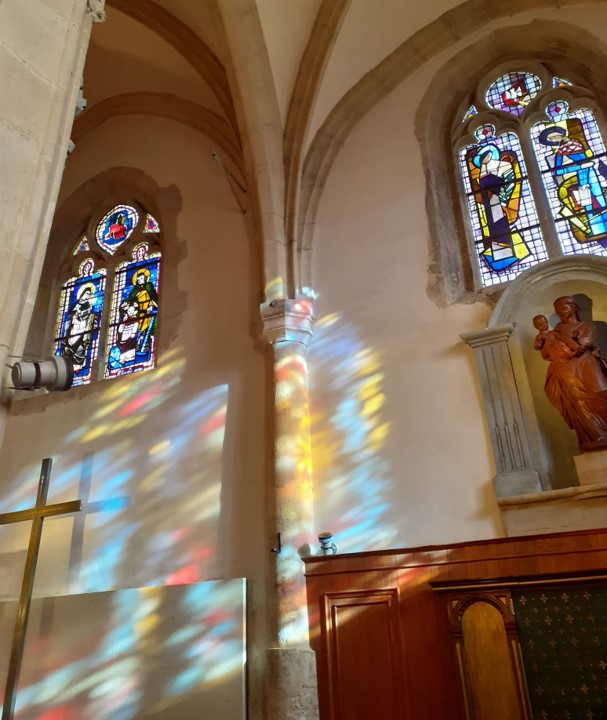
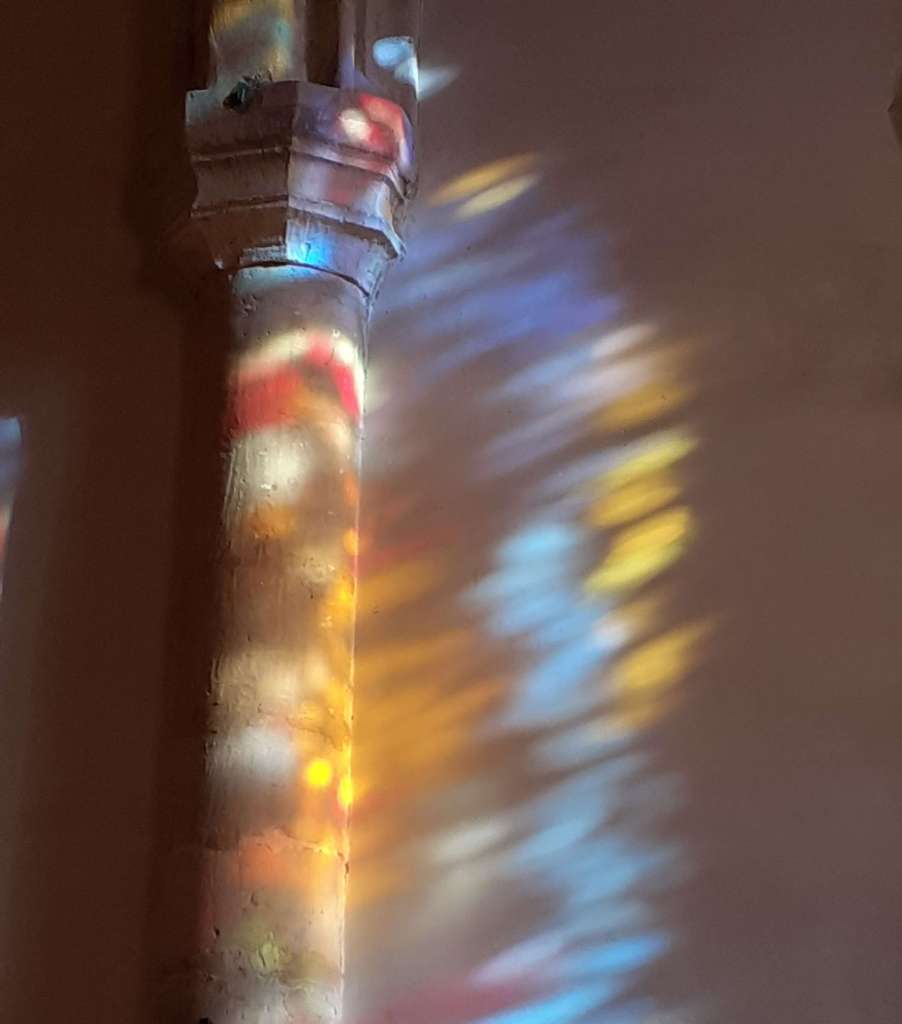
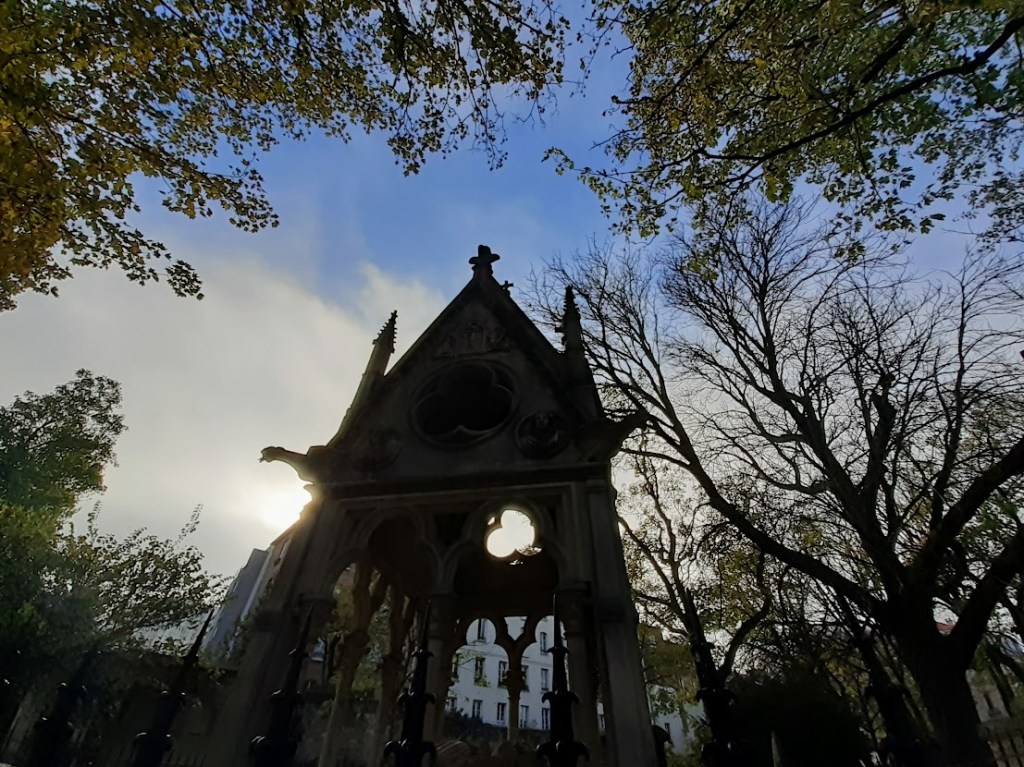
The second point of interest is the church itself, Saint-Germain de Charonne (right and below in the gallery). Originally built in the 12th century with later additions in the 15th and 18th centuries, the style ranges from Romanesque to Classical.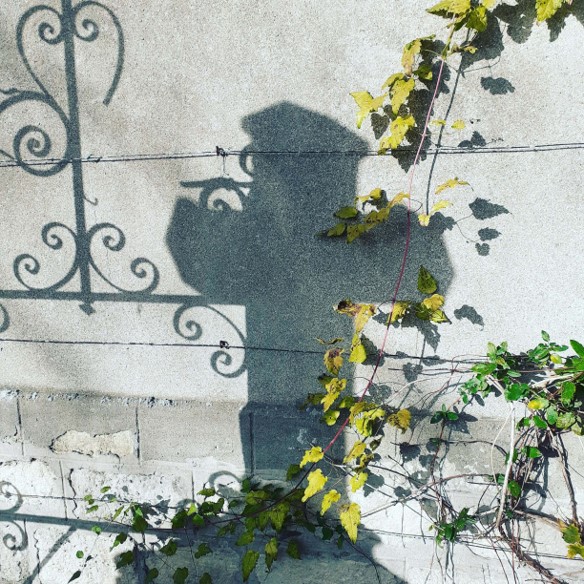
The cemetery itself is much smaller than the Big Three, and the graves are more modest and low-key, with very few of the grandiose mausolea so characteristic of Père Lachaise, Montmartre and Montparnasse.
Pop culture fact: the final wedding scene in 1963 gangster caper Les Tontons flingueurs was filmed in and around the church.


- Paris’s Most Illustrious Dead: Luc’s Cemetery Tour
Part 1: Père Lachaise
Paris’ largest (43 hectares/106 acres) and most famous cemetery merits a separate outing as there’s just so much to see. I used to live nearby (quietest neighbours, EVER), and it was my local park: I used to come here all the time for a stroll, or just to sit and read.
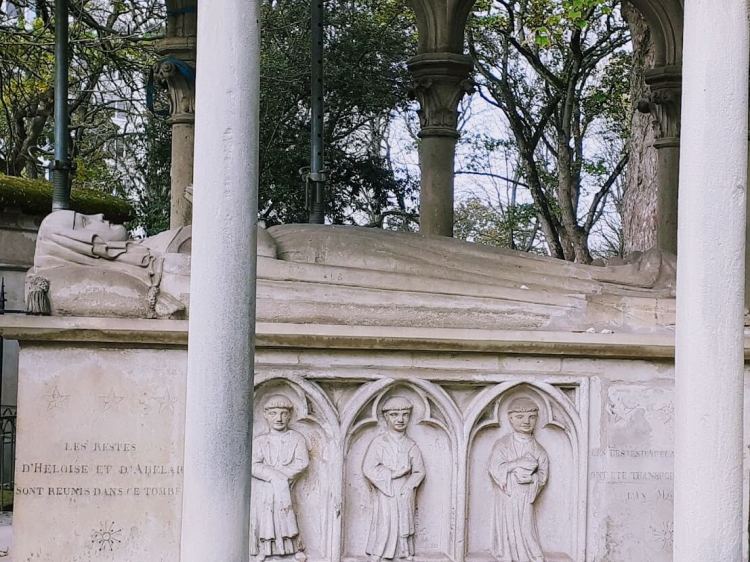
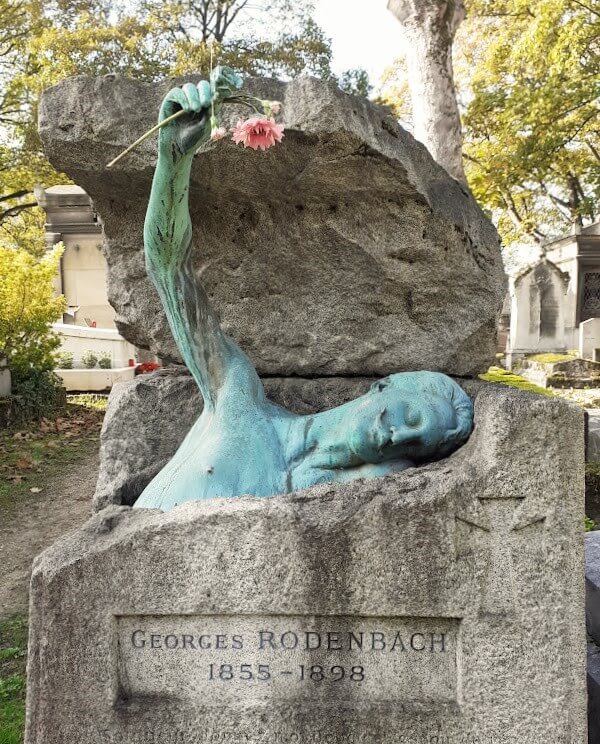
Most visitors tend to make a beeline for the tombs of Jim Morrison and Oscar Wilde. But there are scores of treasures here, from the mausoleum of star-crossed medieval lovers Héloïse and Abélard to Georges Rodenbach’s fascinatingly creepy grave.
It’s a classic love story: Boy meets girl. Girls gets pregnant and gives birth. Boy and Girl marry in secret to avoid damaging Boy’s career in the church. Girl’s evil uncle finds out and has Boy castrated. Boy and Girl retire to a convent/monastery for the rest of their lives.
The 12th-century blue stocking and nun Héloïse and her tutor-turned-lover-turned-husband, Pierre Abelard, a renowned and respected mathematician and theologian, were originally buried elsewhere but their remains were moved to Père Lachaise in 1817.
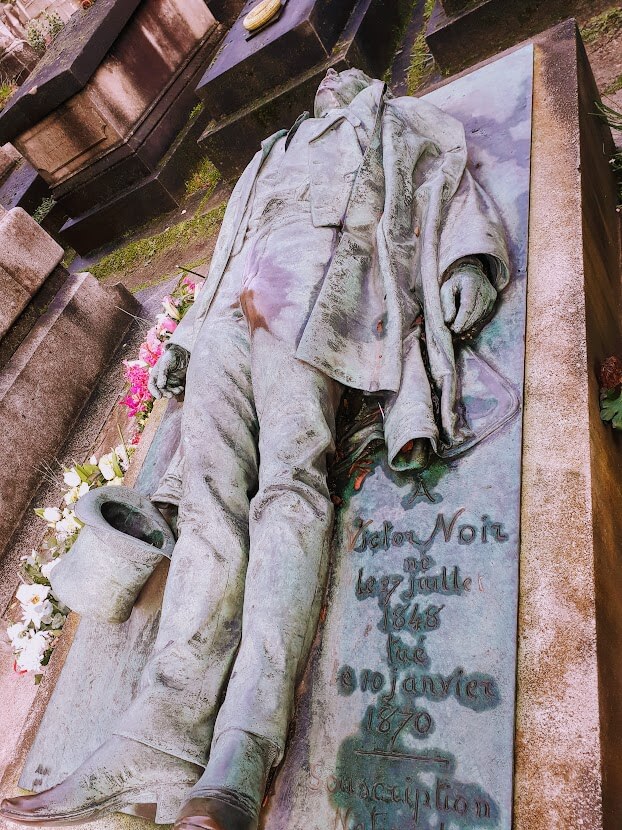
(Urban) legend has it that Victor Noir is some sort of a fertility symbol. Hey, whatever works. I’m not judging. Indeed, Père Lachaise is steeped in romantic – and Romantic – folklore: it’s a key stage on my Romantic pilgrimage to Paris. For in addition to the many writers, musicians and artists of the Romantic movement – Chopin, Alfred de Musset, Gérard de Nerval, Eugène Delacroix, Théodore Géricault (below), Bizet – you can also find the graves of people who lived – and died – in accordance with Romantic tenets, such as Victor Noir (left), an anti-imperialist journalist who was killed in a duel at the age of twenty-one by a cousin of Napoleon Bonaparte. His tomb has since attracted hordes of rather bizarre groupies: I’ll let you draw your own conclusions when you see which parts of his anatomy have been worn away and polished in the photo...

The cemetery is also the final resting place of many notable musicians including Rossini, Bellini (although strictly speaking, only their tombs are here: their remains were eventually transferred back to their native Italy) and Edith Piaf, who was born and spent the first few years of her life less than a kilometre away, as well as literary giants such as Molière, Balzac, Colette (right), Proust, Jean de la Fontaine – and of course, Oscar Wilde.


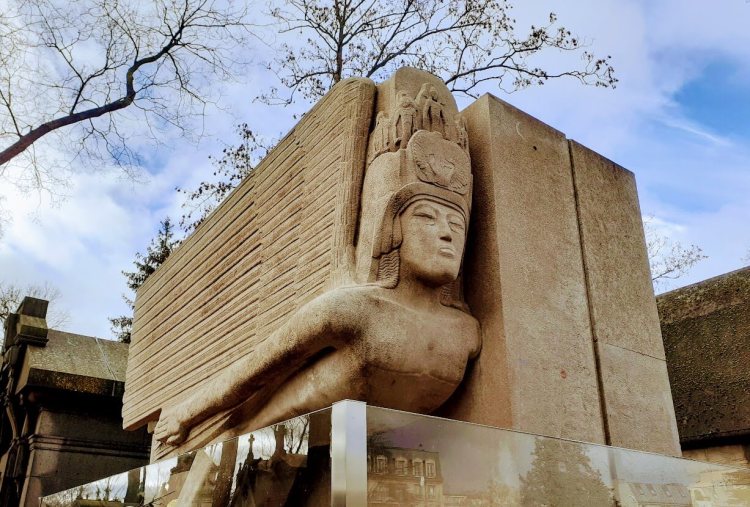
Wilde’s dramatic descent from successful man of letters, leading figure of the Aesthetic movement and darling of fashionable London society into scandal, social ostracization, imprisonment, exile and poverty has been extensively documented. After serving two years’ hard labour (the punishment for homosexuality at the time), with his marriage, finances and reputation in tatters and his health irretrievably diminished, Wilde fled to France where he spent his wretched final years. He died there in 1900, but continued to be the subject of scandal and controversy for years after his demise. Originally buried at Bagneux cemetery, his remains were later moved to Père Lachaise. Then in 1908, a wealthy benefactress sent Robert Ross, Oscar Wilde’s former friend, one-time lover and now the executor of his estate, £2,000 to erect a monument for Wilde at Père Lachaise – on the condition that the sculpture be carried out by the Anglo-American sculptor and painter Jacob Epstein (1888-1959). For the young Epstein, this prestigious project was one of his first major commissions. The sculpture, a naked, winged Sphinx-like creature, probably inspired by Wilde’s poem “The Sphinx”, was completed in London in 1912 – some twelve years after the writer’s death.
“Come forth my lovely seneschal!
So somnolent, so statuesque!
Come forth you exquisite grotesque!
Half woman and half animal!Come forth my lovely languorous Sphinx!
And put your head upon my knee!
And let me stroke your throat and see
Your body spotted like the Lynx!”Oscar Wilde, “The Sphinx”
Unfortunately, and to Epstein’s dismay, the sculpture was caught up in a maelstrom of red tape, controversy and censorship the minute it crossed the English Channel. In short, the French hated it. They were offended by the exposed genitalia and banned it: it was subsequently covered with a tarpaulin and guarded by a gendarme. A lengthy battle between Epstein and the French authorities ensued, with countless petitions, protests and newspaper articles. As a gesture of appeasement, Ross had the offending genitalia covered (to Epstein’s outrage) by a brass butterfly, which was later removed by one of the artist’s allies. The testicles themselves were eventually chipped away and sadly, the tomb was continually defaced by graffiti and lipstick marks for decades, until 2011 when it was restored, courtesy of the Irish government and the Ireland Fund of France. It is now an historic monument and protected by a glass screen.
In addition to boasting the tombs of countless artists and writers, Père Lachaise is of considerable historical and political significance, with commemorations of some of the bleakest periods in history. The Communards’ Wall (Mur des Fédérés) honours the memory of the 147 soldiers of the Commune, the revolutionary government that seized power in Paris from 18 March to 28 May 1871 (and, in Karl Marx’ opinion, the only example in the history of France of a dictatorship of the proletariat), which ended on May 28, 1871, during the aptly named Semaine Sanglante (“Bloody Week”). The soldiers, known as fédérés, were executed against a wall of the cemetery by the Versailles troops and buried in a mass grave at the foot of the wall.
There are also a number of harrowing memorials erected for the victims of the Bergen-Belsen, Dachau, Auschwitz and Sachsenhausen-Oranienburg Nazi concentration camps.Aside from its countless famous (what do we call them: residents? Denizens? Tenants?), the cemetery features a number of curiosities in the form of some elaborate, eccentric, and, in some cases, downright macabre tombs and mausolea. The grave of Georges Rodenbach, (right), a Belgian Symbolist poet and novelist, for example, shows him emerging, Night of the Living Dead-like from his tomb, clutching a rose in his hand.

/
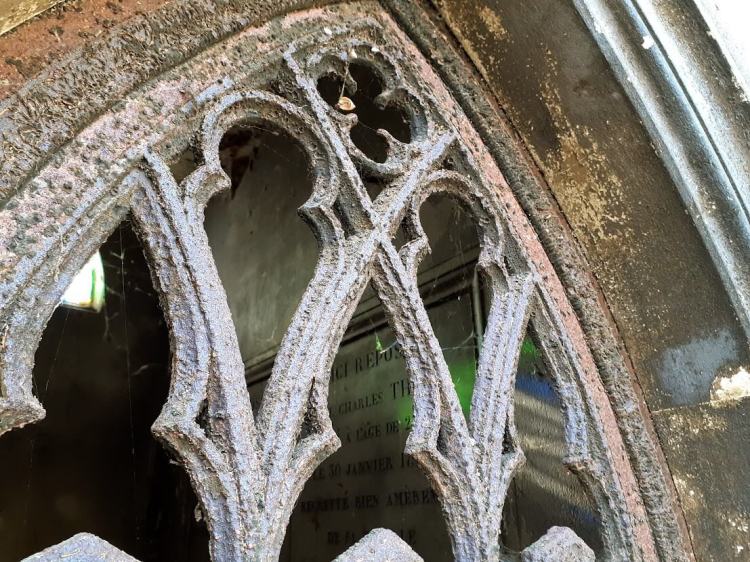
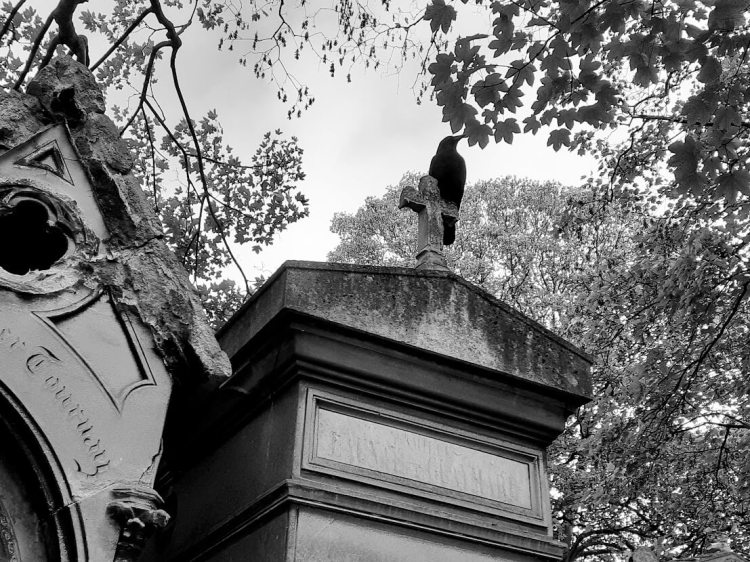
“Nevermore!” Weird random anecdote. Years ago, during one of my frequent walks around Père Lachaise, I came across an English tourist who appeared to be talking to someone (or something!) inside one of the mausolea. As I approached, I saw that she was indeed talking to her mother who had, somewhat ill-advisedly, gone into the tomb to explore when the floor had collapsed beneath her feet. She had fallen several feet down and now just her head was poking out of a hole in the ground. She had hurt her ankle and was visibly (and understandably!) shaken and as neither she nor her daughter spoke French, I called one of the cemetery guards who subsequently called the fire brigade. I stayed to interpret and try and reassure them until the firemen came and rescued the unfortunate lady.
Moral of the story: er, don’t go wandering into people’s tombs.Oh, and one last thing. My grandparents were buried here. But that’s of limited interest to anyone but me.
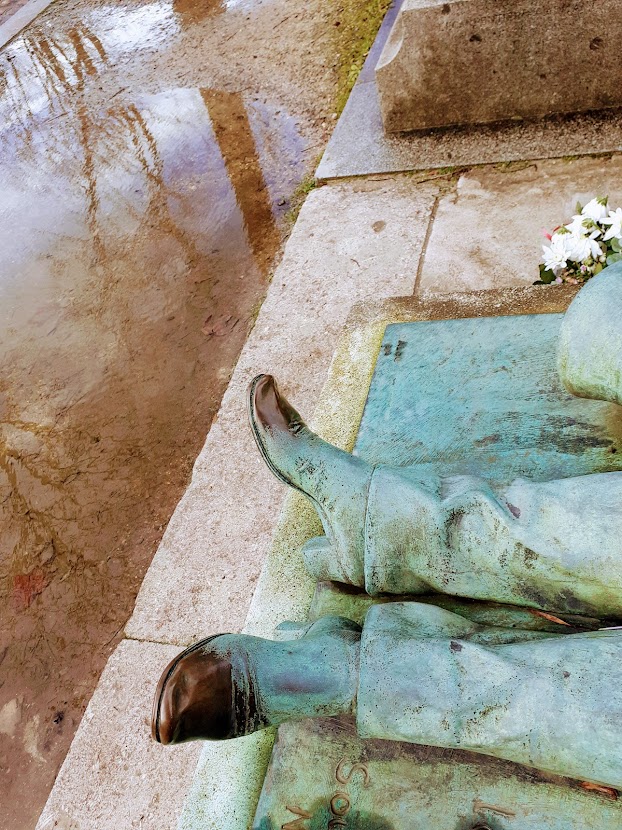
Part 2: Montmartre, Montparnasse and Charonne

- Marnie’s unfeasibly easy smoked mackerel rillettes
Guests are always impressed when I whip this up to graze on with pre-dinner drinks, and yet it’s preposterously easy and quick.
Serves 6
Ingredients
- 5-6 smoked mackerel fillets
- 200g Philadelphia or similar cream cheese
- Juice of 1 lemon
- 1 tbsp horseradish (optional)
Method
- Skin the mackerel fillets, put in a food processor with the other ingredients and whizz. Alternatively, if you prefer it chunkier and more textured, mash the fish manually with a fork then fold in the other ingredients.
- Chill for at least an hour and serve with crusty bread, crackers or crudités. There. Told you it was easy.
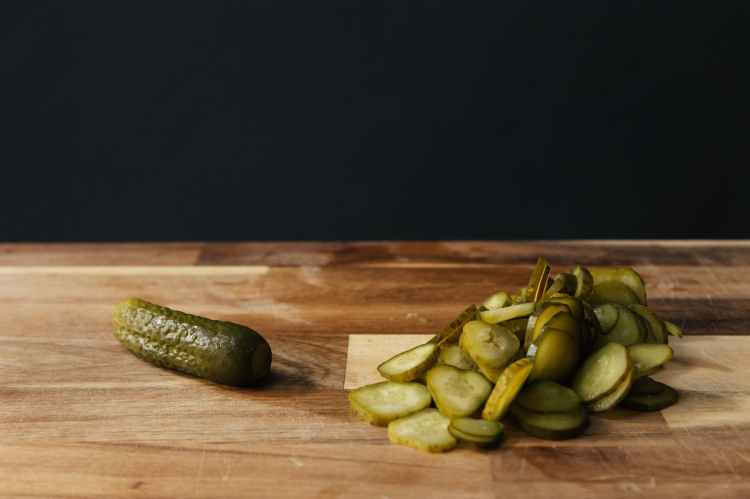
- I find the tartness of pickles – gherkins, red cabbage – is a perfect foil for the saltiness of smoked fish, so try a bit of that on the side.
Suggested wine pairing
Ideally, dry white or sparkling wine, but it goes well with pretty much anything you serve for pre-dinner drinks: ice-cold beer, dry sherry, spritz, etc.
- Miles’s Asian-style warm cabbage salad with honey-glazed duck breasts
Serves 4
Ingredients
- 2 large duck breasts
- Half/three quarters of a head of white cabbage, finely shredded
- 1 red onion, sliced
- 75g roasted peanuts, crushed
- 3 tbsp sesame oil
- 2 tbsp white wine or cider vinegar
- 2 tbsp clear honey
- 5 tbsp light soy sauce
- Big bunch of chopped coriander leaves
Method

- Remove the duck breasts from the fridge 30 mins before cooking time to bring them to room temperature.
- Season then score the skin of the duck through to the fat layer (but not to the meat) in a cross-hatch pattern and place skin-side down in a frying pan. Heat up the pan slowly so that the fat melts and becomes crispy without burning. Fry for about 10-15 mins (depending on how well cooked you like it – see below) until the skin is crisp and brown and the fat has melted out.
- Meanwhile, mix the honey and 3 tbsp of the soy sauce.
- Turn the breasts over and fry for about another 5 minutes. If you have a meat thermometer, it should be 54C for rare, 61C for medium and 65C for medium/well done. Just before the duck is ready, pour over the glaze. Remove from the heat and set aside.
- Meanwhile, put the cabbage, onion and chopped coriander in a large serving dish. Mix the sesame oil, vinegar and remaining soy sauce together, pour the dressing over the vegetables and toss.
- Slice up the duck breasts, place on top of the salad and drizzle over the remaining glaze from the pan. Sprinkle over the crushed peanuts and garnish with toasted sesame seeds and sprigs of coriander.
Suggested wine pairing

I find a good fruity rosé is great with both salads and sweet-savoury dishes, so perfect for this.

 Susan Turbie
You must be logged in to post a comment.